

The Nervous System Trap Nobody Talks About
Why habits and old beliefs keep you stuck—and how to change it.
🌱I explore human desertification, why modern life leaves capable people inwardly dry. I help leaders and creatives restore a healthy inner landscape through regenerative principles and holistic decisions. 🌱
Not 71 like we’re used to. Not “cozy.”
But tropical rainforest in November.
They meant no harm.
But still… I noticed it.
And I realized something deeply anchored in all of us.
Let me explain and start with asking you:
Do you know the sound of splitting wood on a cold morning?
That crisp, clean crack that echoes across the garden.
Not just the sound of winter prep, but of responsibility.
It’s the sound of “We’ve got what we need.”
Of being prepared for the coming winter
Of earning your comfort.
A few months ago, we had volunteers staying on our homestead. Two kind, hard-working souls offering their hands and sweat. To learn, to relax, to experience life.
They helped us cut wood. Scrape the paths.
Cover the raised beds with compost, straw, and leaves.
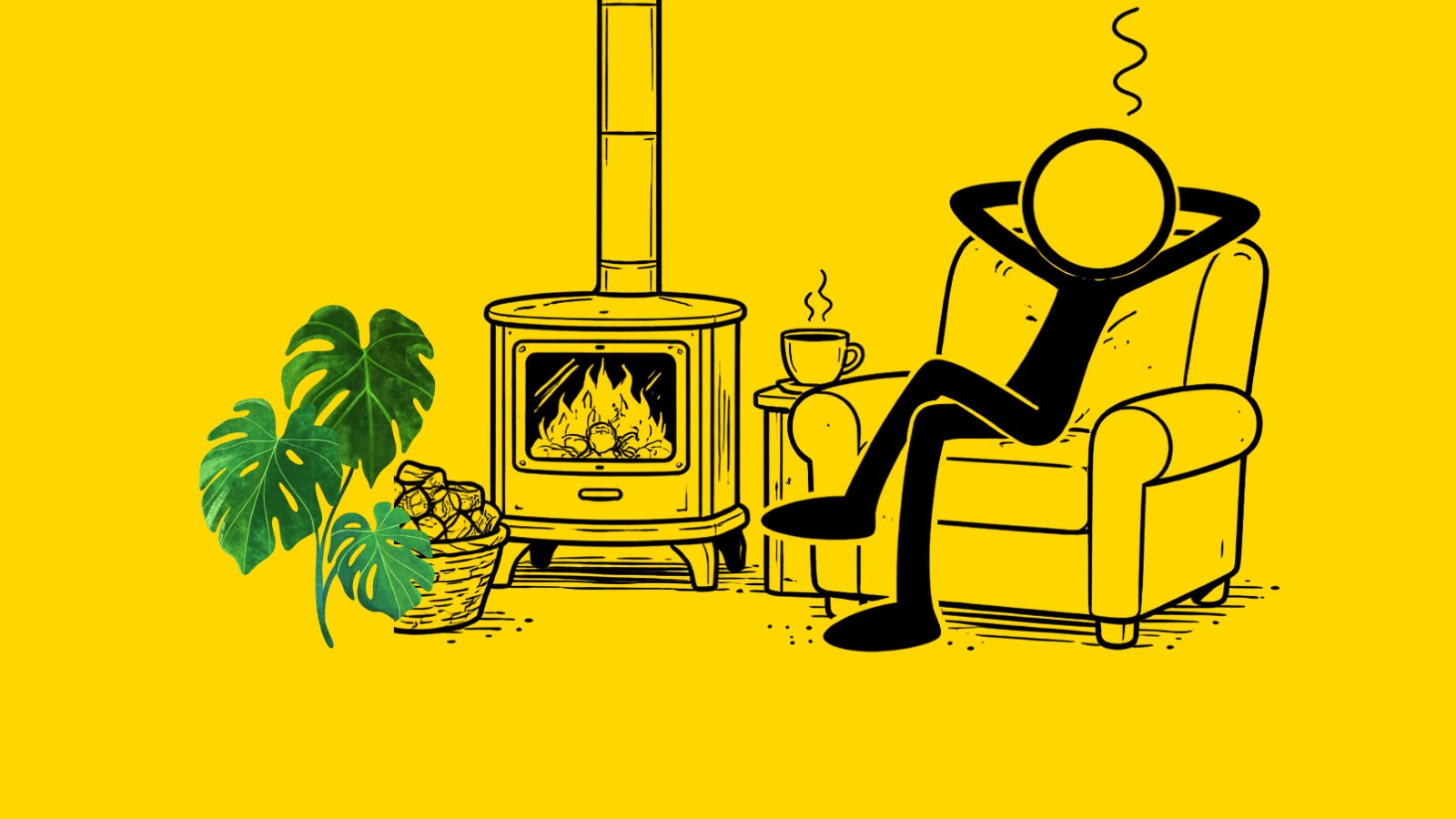
And while they stayed in our guest apartment—heated by a charming little woodstove—they kept the temperature cranked up to 26°C.
We’re used to a cozy 22°C (about 72°F), but our guests cranked it up to 26°C (nearly 79°F)…”
Twenty-six!
With wood they didn’t chop.
With habits they didn’t question.
With good, expensive energy we treat like gold.
Even if part of it grows right here in our garden.
I talked to them. And here’s what I learned:
You can’t change people in a few days.
- Not their patterns.
- Not their priorities.
- Not their unconscious use of resources.
Even when the logic is obvious.
Even when it’s a kind, generous logic—like, “Maybe don’t burn a week’s worth of firewood in a single evening.”
Still: nothing changes. Not immediately.
And here’s why:
Comfort is not rational.
It’s emotional.
It’s ancient.
It’s full of memory.
To our American guests, that 26°C heat wasn’t indulgent.
It felt like home.
It felt like grandma’s living room during Christmas.
Like warm socks and safety.
Like a break from the world.
Their bodies weren’t asking, “Is this sustainable?”
They were saying, “This feels familiar. I can finally relax.”
You can’t overwrite that with a polite suggestion.
Not in a weekend.
Not with a speech.
Not even with facts.
Because belief systems aren’t built on logic—they’re built on repetition, emotion, and survival.
Most of us grew up learning that more comfort = more love.
Those warm rooms mean safety.
That “cold” is dangerous, or even a sign of failure.
So when you ask someone to turn the dial down—even if it makes total sense to you—you’re not just asking them to adjust the temperature.
You’re asking them to change what “home” feels like.
And no one does that instantly.
How Do You Actually Change a Deeply Rooted Habit?
Because let’s be honest—comfort isn’t easy to rewire.
It’s not just mindset. It’s biology.
The human brain is built to prioritize familiarity—even when it’s not healthy.
Why? Because predictable patterns once meant survival.
If something felt safe yesterday, your brain assumes it will be safe again today.
Add in years (or decades) of repetition, and what you get is not just a habit—it’s a neurological shortcut.
Your nervous system literally gets faster and more efficient at choosing the path you’ve walked the most.
And that’s why even smart, conscious, generous people crank the stove to 26°C and never question it.
Because in their body, that temperature = safety.
In their mind, the firewood just appears.
That belief didn’t come from selfishness—it came from a hundred unspoken stories about comfort, love, and home.
So no: change doesn’t happen in a weekend.
But it does happen.
When you move with awareness.
When you build new cues.
When you choose better rhythms.
🌱 Living Regeneratively Starts With Small Shifts—Here Are Three
If you want to begin shifting out of unconscious comfort and into regenerative rhythm, start here:
1. Notice what you call “normal.”
Do you need the room that warm?
Do you need to check your phone right now?
Is that deadline really urgent—or are you hooked on pressure?
Start catching the defaults that no longer serve you.
2. Build friction where you need a pause.
We store firewood in a way that reminds us it’s precious.
Where can you add a small delay between impulse and action?
That one pause can save you time, health, or regret later.
3. Choose one regenerative upgrade this week.
Turn off the screens earlier.
Eat something that grew in real soil.
Talk to someone instead of doomscrolling.
Tiny shifts, repeated with care, reshape who you become.
And maybe that’s the real lesson here:
Regeneration isn’t about fixing people.
It’s about choosing to live aligned—anyway.
With your values.
Your rhythm.
Your hard-earned warmth.
To your freedom and health,
Daniel
PS: If your rhythms are off, your body’s louder than your brain, and your soul’s whispering, “Not like this…”
Then maybe it’s time for TRY - The Regenerative You
